 Image 1 of 1
The problem
We’ve found that the widely available Series gearbox and transfer case gaskets have slightly misaligned stud holes and bolt holes (a common problem with aftermarket Series gaskets).
To prevent such gaskets from tearing during installation, you have to take a razor blade and make several radical cuts around each stud hole and bolt hole. This takes at least half an hour, and it doesn’t always work: sometimes the gasket rips at the narrow margins of certain holes, because of the cuts you’ve made.
Our solution
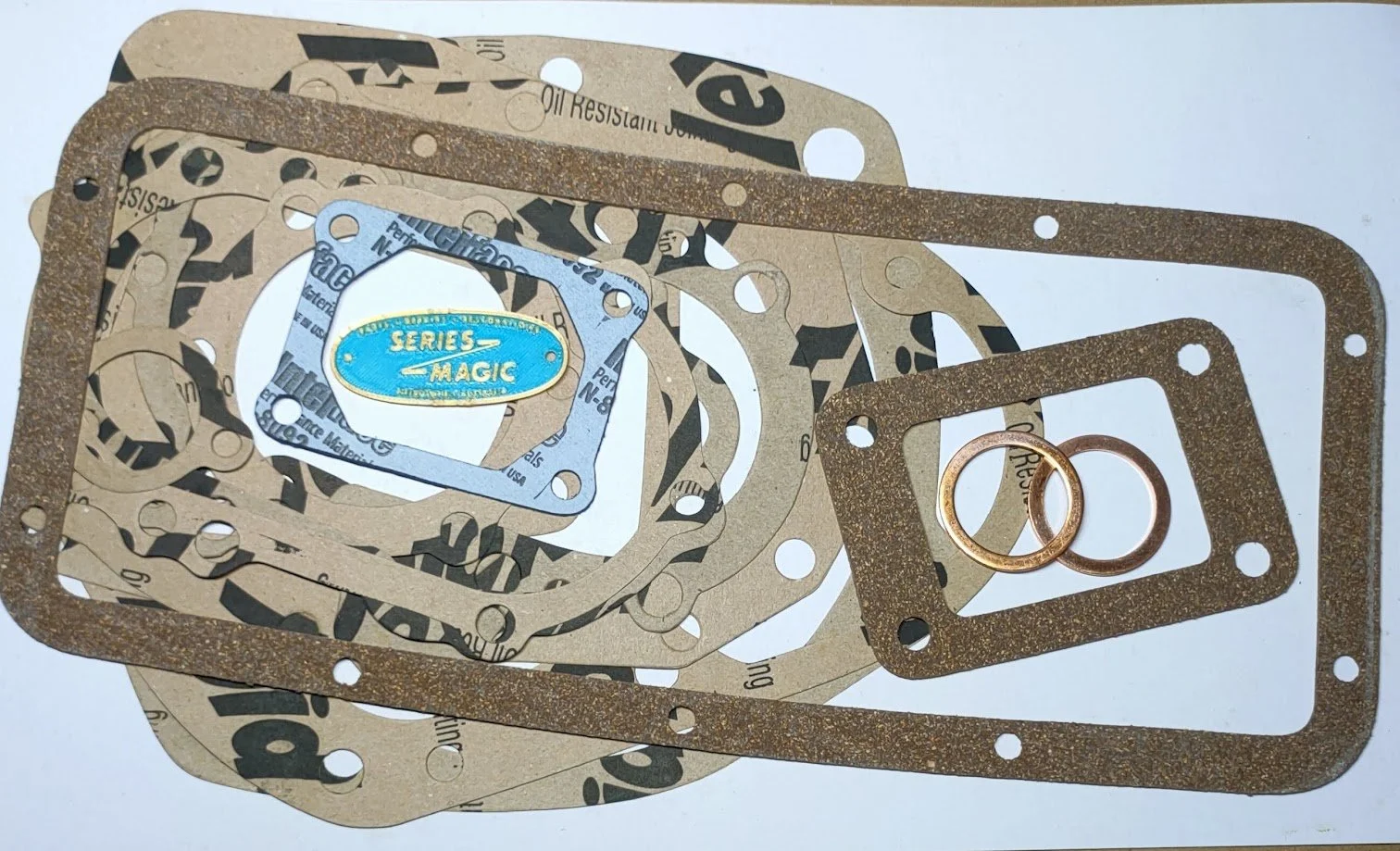
The gearbox and transfer case gasket kits we use and recommend are an excellent fit over the studs and bolts, and the transfer case sump plate gasket is made of cork—like the now-unobtainable Genuine ones—rather than cardboard. A properly-installed cork gasket tends to seal better than a cardboard gasket if the sump plate is distorted (as they often are, by overtightening of the fixings).
Installation tips
For best results with cork gaskets, apply a thin smear of a non-hardening gasket dressing, such as Permatex Aviation Form-A-Gasket 80019, to the underside of the sump plate and the corresponding gasket face.
Be sparing: if you apply too much dressing, you’ll lubricate the gasket rather than make it adhere, and the gasket will tend to distort and squeeze out as you tighten the fixings. The transfer case side of the gasket should be installed either dry or with a very thin film of gasket dressing applied to the transfer case.
Don’t overtighten the fixings: Cork gaskets work best when they remain a bit spongy rather than being squeezed flat. After the first few heat cycles the gasket will have settled, and you may need to tighten the fixings a little bit more; but don’t overdo it.
The problem
We’ve found that the widely available Series gearbox and transfer case gaskets have slightly misaligned stud holes and bolt holes (a common problem with aftermarket Series gaskets).
To prevent such gaskets from tearing during installation, you have to take a razor blade and make several radical cuts around each stud hole and bolt hole. This takes at least half an hour, and it doesn’t always work: sometimes the gasket rips at the narrow margins of certain holes, because of the cuts you’ve made.
Our solution
The gearbox and transfer case gasket kits we use and recommend are an excellent fit over the studs and bolts, and the transfer case sump plate gasket is made of cork—like the now-unobtainable Genuine ones—rather than cardboard. A properly-installed cork gasket tends to seal better than a cardboard gasket if the sump plate is distorted (as they often are, by overtightening of the fixings).
Installation tips
For best results with cork gaskets, apply a thin smear of a non-hardening gasket dressing, such as Permatex Aviation Form-A-Gasket 80019, to the underside of the sump plate and the corresponding gasket face.
Be sparing: if you apply too much dressing, you’ll lubricate the gasket rather than make it adhere, and the gasket will tend to distort and squeeze out as you tighten the fixings. The transfer case side of the gasket should be installed either dry or with a very thin film of gasket dressing applied to the transfer case.
Don’t overtighten the fixings: Cork gaskets work best when they remain a bit spongy rather than being squeezed flat. After the first few heat cycles the gasket will have settled, and you may need to tighten the fixings a little bit more; but don’t overdo it.